
Added Time in Football: How the Final Minutes Really Work
Added Time can turn an ordinary football match into an unforgettable finish. The clock reaches 90 minutes, the fourth official raises a board showing “+6,” and suddenly both…
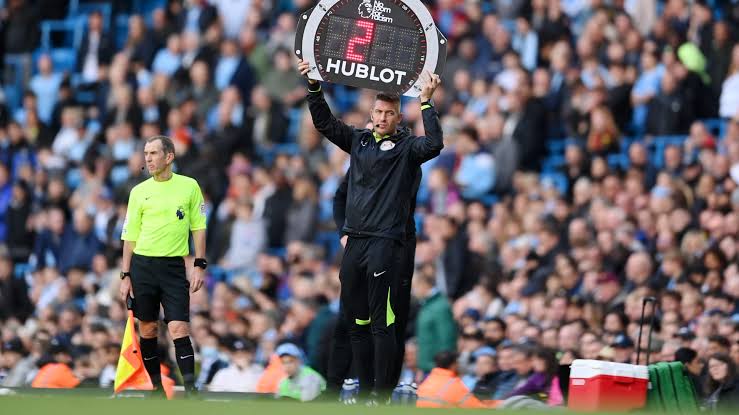
Added Time can turn an ordinary football match into an unforgettable finish. The clock reaches 90 minutes, the fourth official raises a board showing “+6,” and suddenly both teams have one final opportunity to change the result.
These extra minutes are often called stoppage time or injury time. However, they do not exist only because of injuries. They compensate for playing time lost during substitutions, celebrations, VAR reviews, disciplinary incidents, deliberate delays, and other interruptions. If you are looking for a reliable starting point, visit the Velki Pro Agent homepage to explore registration assistance, trusted agent resources, and useful information designed for users across Bangladesh.
What Is Added Time in Football?
Added Time is the period played at the end of each half to compensate for significant delays that occurred during that half. A standard match consists of two 45-minute halves, but the referee can allow additional minutes before blowing the whistle.
The clock shown on television normally continues running during stoppages. Unlike basketball, football does not stop the main match clock whenever the ball is out of play.
Because of this system, the referee and other match officials monitor delays throughout the half and determine how much time should be restored.
Why Is Added Time Given?
The referee does not add time for every throw-in, corner, or normal break in play. Instead, allowance is made for significant time lost through specific events listed in Law 7 of the Laws of the Game.
| Cause of delay | Why time may be added |
|---|---|
| Substitutions | Players need time to leave and enter the field |
| Injuries | Assessment, treatment, and removal can delay play |
| VAR incidents | Checks and on-field reviews may take considerable time |
| Goal celebrations | Long celebrations delay the restart |
| Disciplinary action | Referees may need time to issue cards or manage conflict |
| Medical breaks | Drinks and cooling breaks interrupt normal play |
| Time-wasting | Deliberate delays reduce effective playing time |
| Outside interference | Crowd incidents or objects on the field can stop play |
The official list also allows referees to consider any other significant delay to a restart. This gives the referee flexibility when an unusual incident interrupts the match. If you are searching for verified representatives, explore our Master Agent List to learn more about trusted agents who provide professional registration assistance.
How Is Added Time Calculated?
Added Time is decided by the referee, usually with support from the fourth official and the wider officiating team. They record or monitor the major interruptions that happen during each half.
The calculation may include:
- time used for substitutions
- the length of injury stoppages
- VAR checks and reviews
- extended celebrations after goals
- delays caused by disciplinary incidents
- deliberate attempts to waste time
The aim is not to estimate how long the ball was out of play in total. If every throw-in, free kick, and goal kick were counted, matches would regularly become much longer.
Instead, officials compensate for delays considered significant under the Laws of the Game.
Why the Board Shows Only a Minimum
One of the most misunderstood Added Time rules concerns the number displayed by the fourth official. When the board shows six minutes, it means at least six additional minutes will be played.
The referee may increase that figure when another delay occurs after the 90th minute. However, the announced time cannot simply be reduced.
For example, imagine that six minutes are announced and a player then receives treatment for two minutes. The final whistle may not arrive until approximately the 98th minute.
This is why a goal can legally be scored at 90+7 when the board originally displayed only five additional minutes. For information on responsible online gaming and player safety, visit: Gamcare
Does the Referee Stop the Watch?
The referee keeps the official time and can account for interruptions using match equipment and assistance from other officials. The stadium clock or television graphic is useful for spectators, but it does not overrule the referee’s timekeeping.
Only the referee decides when the half has ended. The whistle may therefore come slightly before or after the exact second viewers expect, depending on further stoppages and the official calculation.
Why Has Added Time Become Longer?
Fans have seen longer periods of Added Time in many major competitions because officials have been encouraged to calculate lost time more accurately.
At the 2022 FIFA World Cup, FIFA referees were instructed to account more carefully for injuries, substitutions, goal celebrations, and VAR incidents. FIFA explained that the approach was intended to increase effective playing time rather than allow long interruptions to disappear from the match.
The trend does not mean every match must contain eight or ten extra minutes. A half with few major interruptions may still receive only a small allowance.
Added Time and Penalty Kicks
A half cannot necessarily end just because the displayed minimum has expired. When a penalty kick has to be taken or retaken, the referee extends the half until that penalty is completed.
If the kick results in a valid goal, the referee may end the match without requiring another kick-off. This situation is unusual, but it is directly covered by the Laws of the Game.
Common Added Time Misunderstandings
Fans often assume the referee must blow the whistle as soon as the displayed period ends. In reality, that number is only the minimum.
Other common misunderstandings include:
- every stoppage must be counted second by second
- the referee must end the game when an attack finishes
- time lost in the first half can be added to the second
- injury time is awarded only for injured players
The IFAB states that a first-half timekeeping error must not be corrected by changing the length of the second half. Each half is handled separately.
Added Time FAQ
Is added time the same as injury time?
The terms are commonly used interchangeably. “Added time” or “additional time” is more accurate because the allowance covers many delays beyond injuries.
Can a goal be scored after the announced time?
Yes. The board displays the minimum period, so additional delays can extend the match beyond it.
Who decides how much time is added?
The referee makes the final decision. The fourth official publicly displays the minimum amount at the end of the final minute of the half.
Can added time be reduced?
No. Once the minimum has been announced, the referee may increase it but cannot reduce it.
Conclusion
Added Time ensures that major interruptions do not unfairly remove too much action from a football match. It covers delays caused by substitutions, injuries, celebrations, VAR, disciplinary incidents, time-wasting, and other significant stoppages.
The number on the board is a minimum rather than an exact finishing point. Once fans understand that rule, dramatic goals beyond the displayed minutes become much easier to explain.
সম্পর্কিত আর্টিকেল

Velki Pro Poker Rules: 7 Critical Checks Before You Bet
Velki Pro Poker Rules are broadly standard across the industry, which is exactly why players stop reading them.…
আর্টিকেল পড়ুন
Five Premier League Matches You Cannot Miss on Opening Weekend
Premier League matches return in August with an opening weekend built around champions, promoted clubs, local rivalry and…
আর্টিকেল পড়ুন
Velki Pro ক্রিকেট বেটিং গাইড ২০২6 – বাংলাদেশে কীভাবে খেলবেন ও জিতবেন
বাংলাদেশে ক্রিকেট জনপ্রিয়তার শীর্ষে, আর এখন অনলাইন প্ল্যাটফর্মের কারণে বেটিং আরও সহজ হয়ে গেছে। Velki Pro Bangladesh বর্তমানে…
আর্টিকেল পড়ুনসব ব্লগ দেখুন
টিপস, গাইড, স্ট্র্যাটেজি — পেশাদার প্লেয়ারদের লেখা আরও আর্টিকেল।